Who Kidvation Global is
Kidvation Global calls itself the headquarters for youth innovation. Its Applied Imagination curriculum is a research-based program for students aged 8 to 18 that teaches them to apply critical thinking to real scenarios. Schools run it as an enrichment program, an after-school activity or a dedicated class period. More than 2,400 students have taken part.
Youth entrepreneurship is one of the curriculum's tracks. Students develop product ideas that solve real problems, build them out, and pitch them at events like Kidvation's Capstone pitch night.
“Kidvation Global is an innovation program teaching young people how to apply their ideas to the real world. And one of the ways we do that is through entrepreneurship, where kids develop product ideas to solve real problems.”
The learning problem: turning ideas into structure
Children are strong divergent thinkers. Ask a class for product ideas and you get a hundred. The harder skill is convergent thinking: taking one idea and giving it a shape, with the parts, steps and questions it needs. That is the step where young inventors stall, and where a teacher's time runs out.
“One thing we've learned about kids over the years is that they are great divergent thinkers. They could come up with a million ideas for a product, but they're not always the best convergent thinkers, putting form to their ideas. And that is where Kidvation MindMapper comes in.”
Kidvation wanted a tool that would do one job: take a student's idea and return a structured plan the student could then explore, question and present.
What Kidvation licensed
Kidvation did not want a general-purpose app. It wanted a focused version of MindMap AI built around one task, safe for children, and branded as its own. MindMap AI delivered a dedicated deployment on a Kidvation subdomain with:
Student accounts and admin roster
First name, last name, school and email, so Kidvation staff can see who is enrolled.
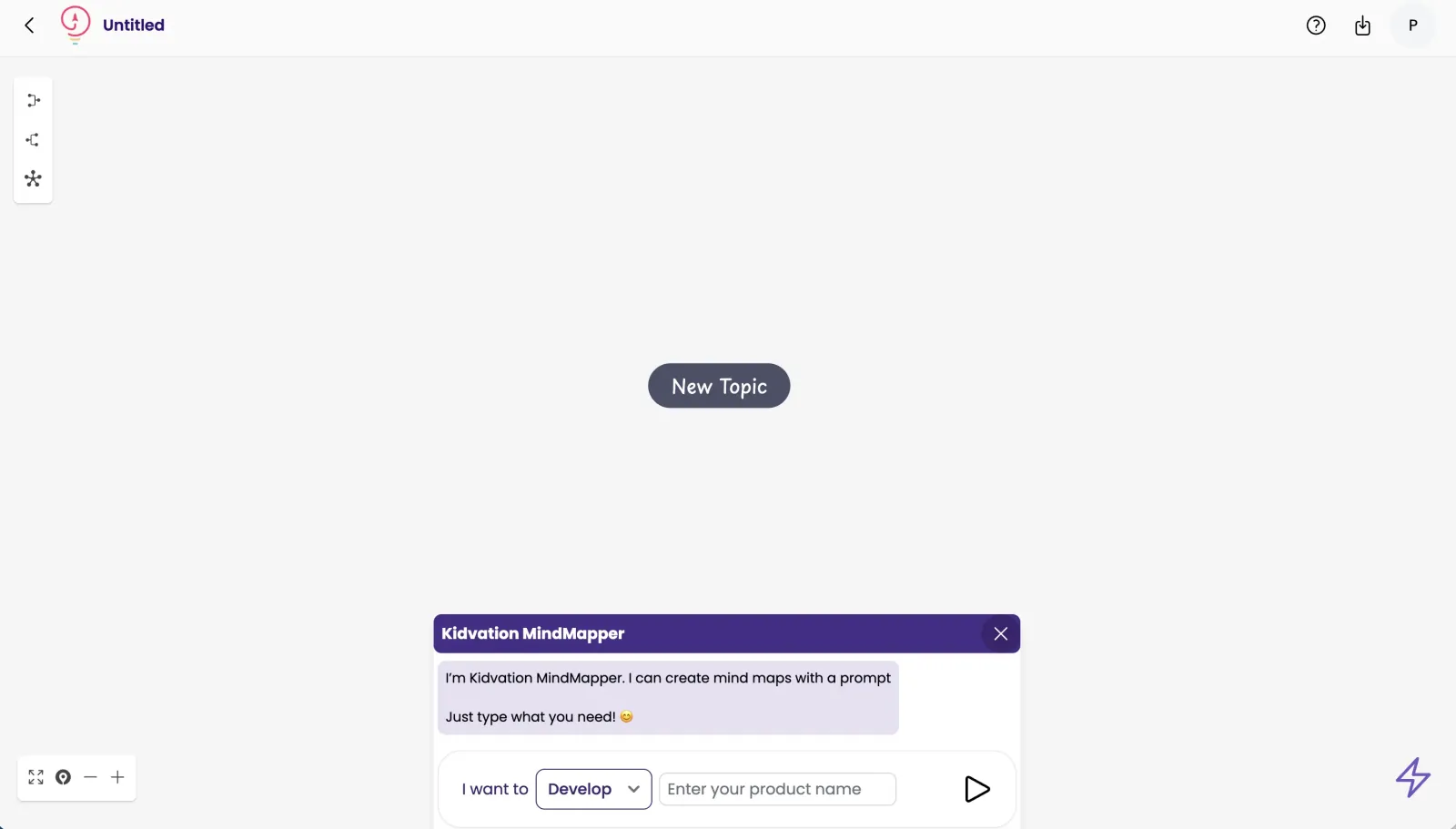
Guided prompt box, two modes
Develop and Market, so students frame their idea before the map is generated. The answering system is tuned to the mode selected.
Content constraints for children
AI output constrained to what is appropriate for children aged 8 to 18.
Built for the classroom
A kid-friendly typeface, full-screen and zoom controls, prompt history, and PNG export so students can drop maps into a pitch deck.
Google Gemini as the model
Hosted on Google servers in the United States.
Kidvation manages student access and consent under its own program policies, as it does for the rest of its curriculum. This gave Kidvation a tool it could put in front of a nine-year-old on day one, and gave MindMap AI its first view of how the product behaves in a classroom.
How it runs in class
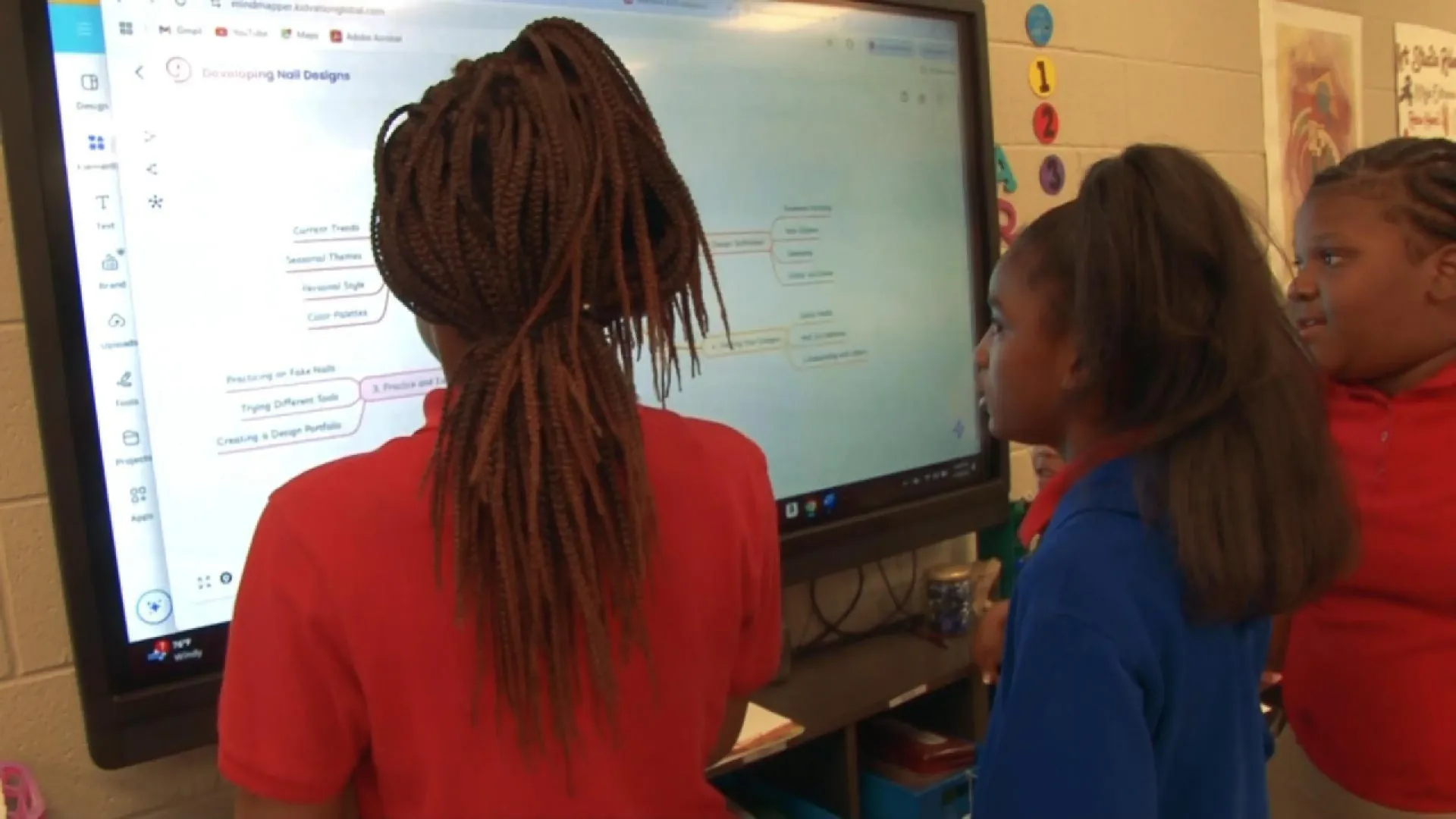
A teacher opens Kidvation MindMapper on the smart board. Students follow on laptops. A student types a product idea, picks Develop or Market, and gets a map back: the materials or recipe, how to design and build it, who it is for, how to price and promote it, and what to test. Then they ask follow-up questions about any branch.
Maps students built in the video
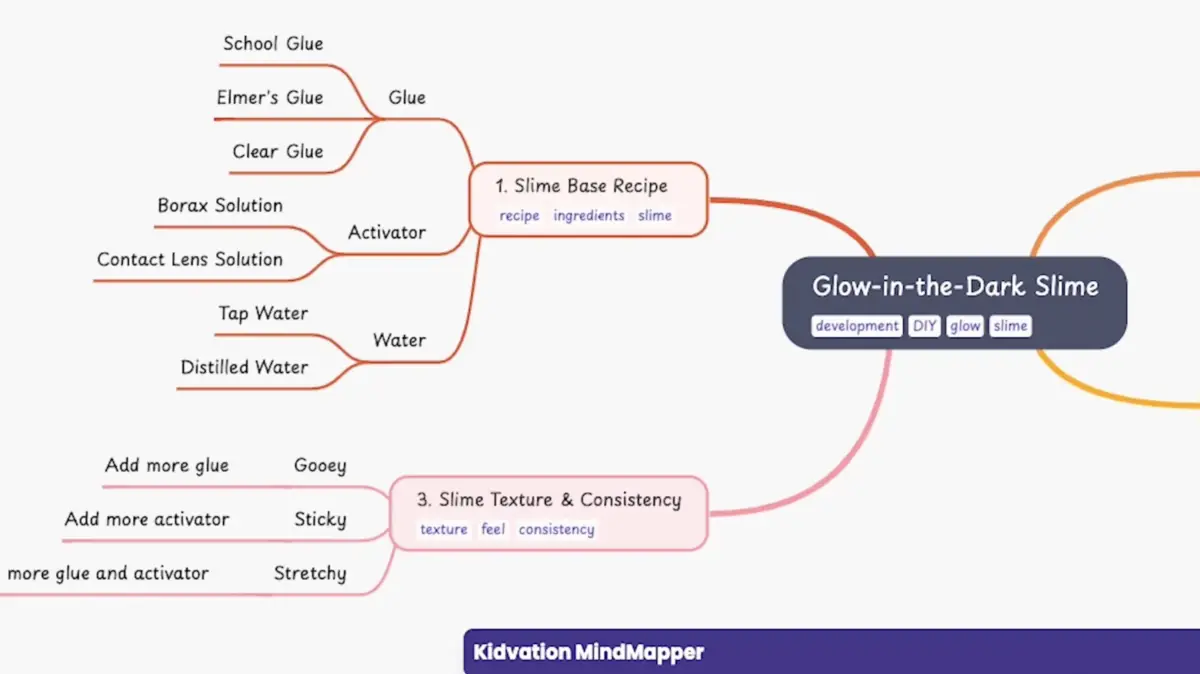
Glow-in-the-Dark Slime
Base recipe (glue, activator, water), texture and consistency, testing and improvement.
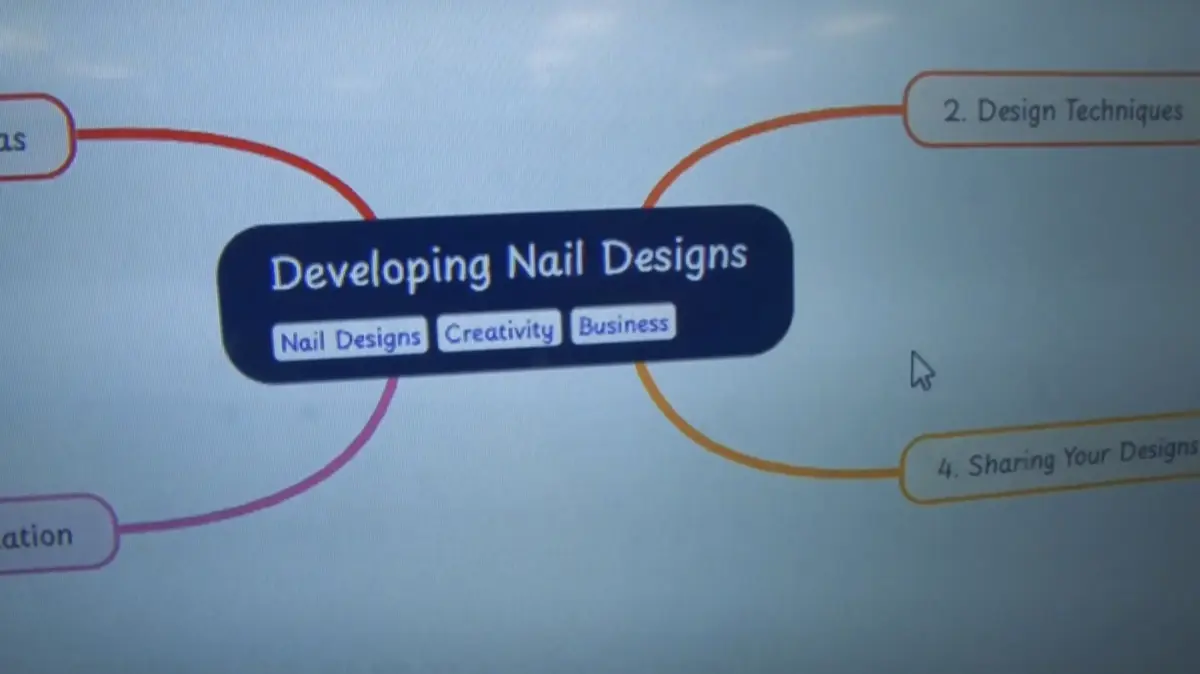
Developing Nail Designs
Design techniques, sharing your designs.
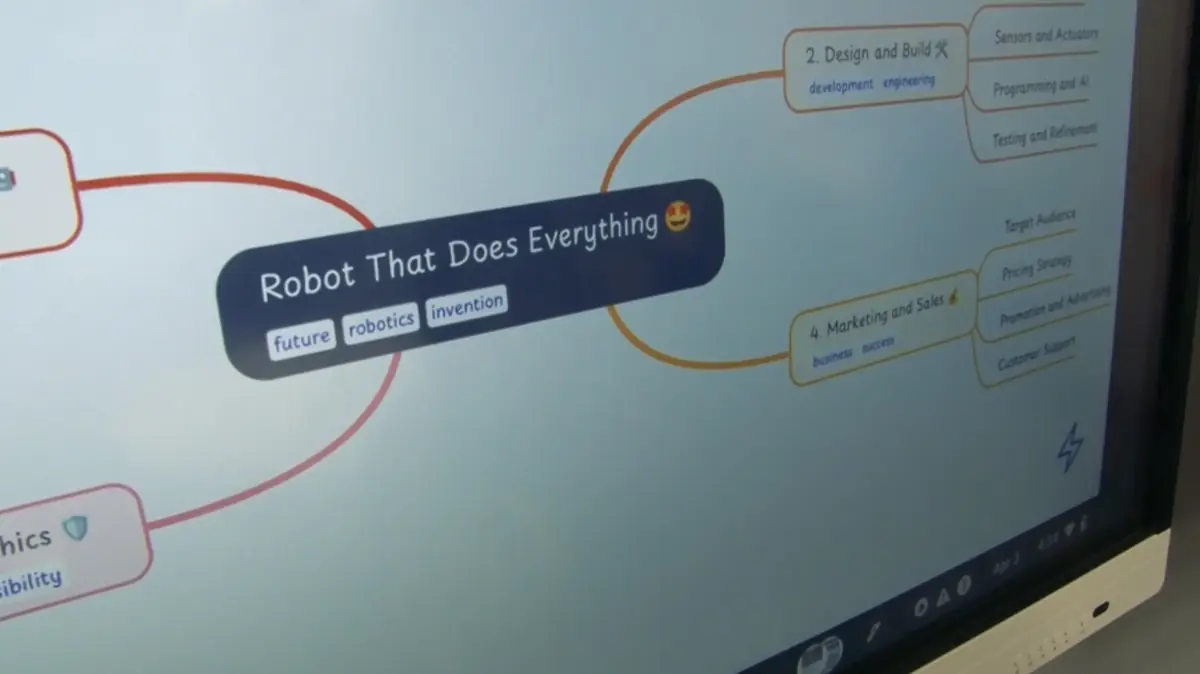
Robot That Does Everything
Design and build (sensors and actuators, programming and AI, testing and refinement), marketing and sales (target audience, pricing, promotion).
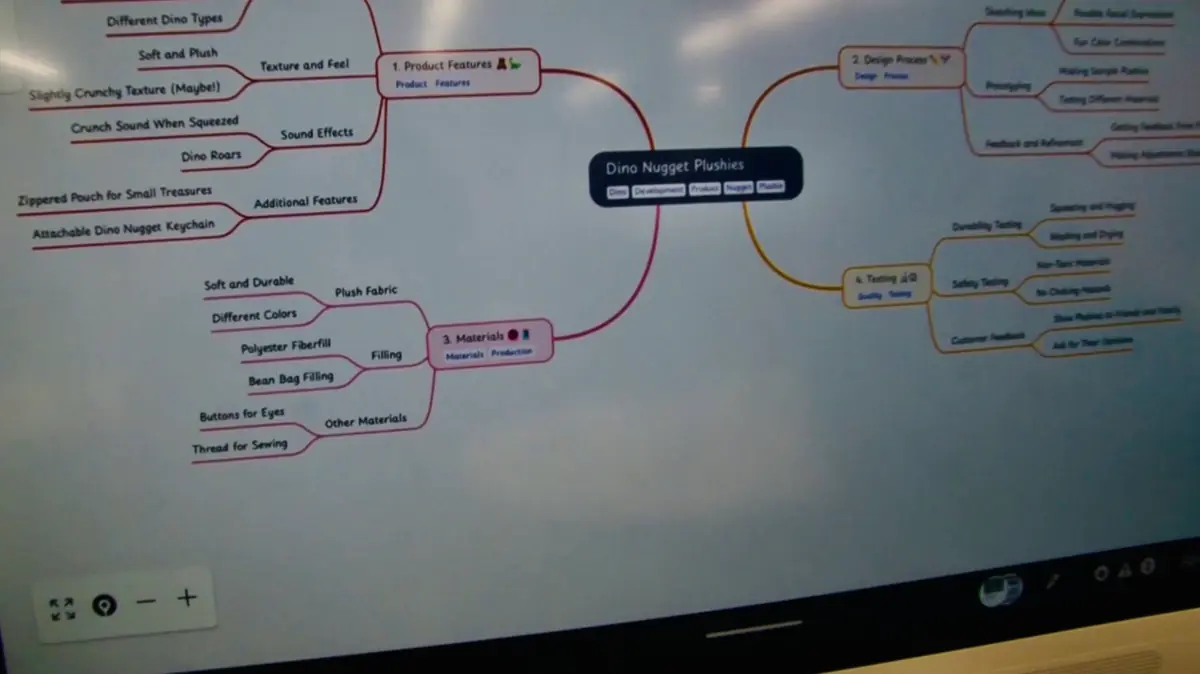
A dino plush toy
Texture and feel, sound effects, a zippered pouch for small treasures, materials and filling.
“The AI-powered system allows you to enter the product idea you want to develop, and it creates a mind map of the various things you'll need to think about to actually turn that idea into reality.”
The “shoes and clothes bread” moment
One group wanted a map for their own shoe and clothing brand. They typed “shoes and clothes bread” by mistake. MindMapper built a serious map anyway. That got the room's attention, and students started testing it with the wildest ideas they had: potato animal toys, a chicken nugget stuffed animal, a candy-themed pool, and seasoning utensils, a spoon made of Cajun seasoning that flavours food as you eat.
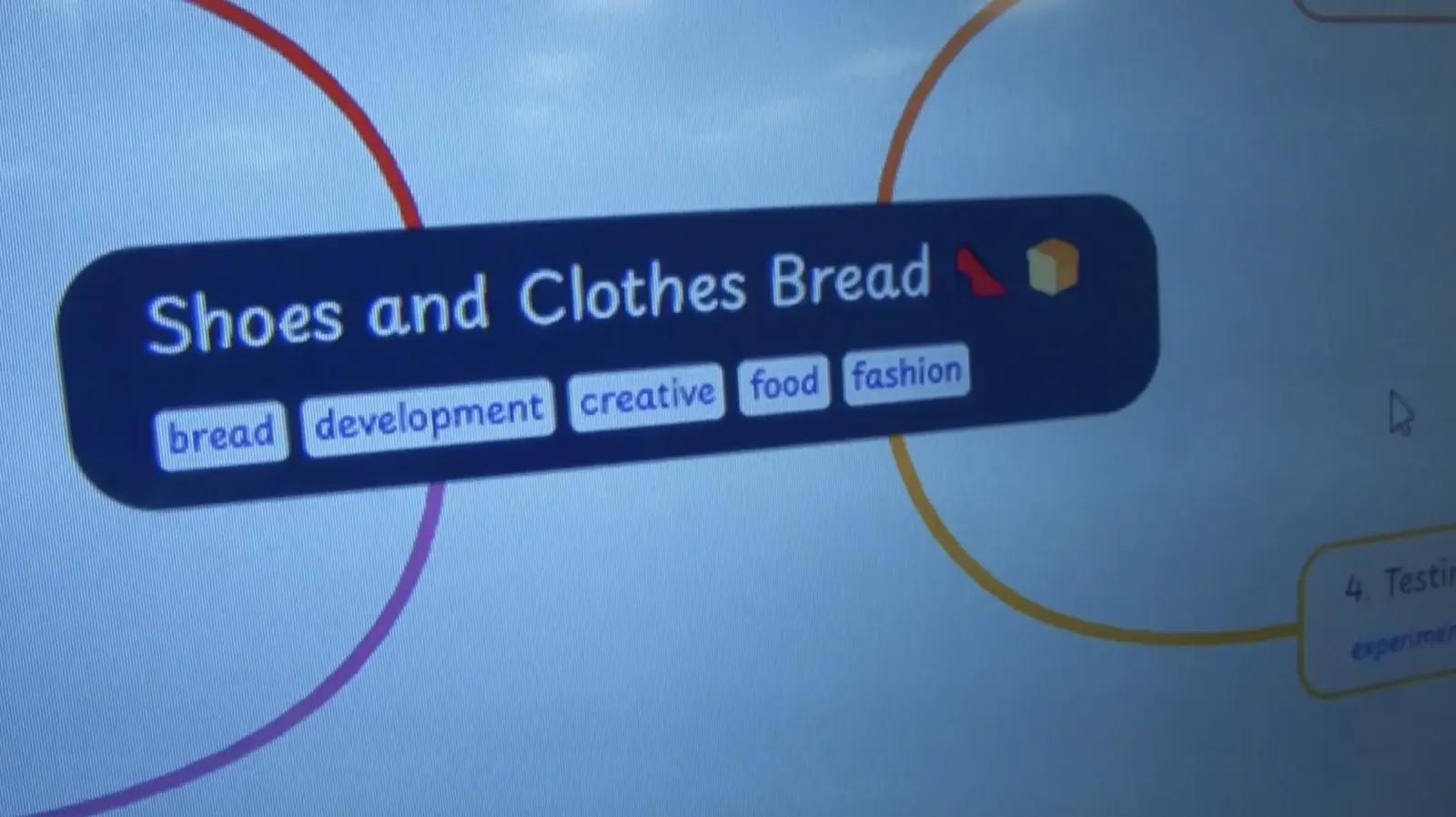
“And it cranked out serious mind maps for all of them. This activity really helps students take seriously the idea that they can create a real plan to accomplish just about anything. Even big, crazy things.”
How the partnership began
Prasanth Subendran, Co-Founder and CEO of MindMap AI, spent six weeks in Oklahoma in 2024 as a fellow in the Professional Fellows Program, a U.S. Department of State exchange run by the University of Oklahoma's Gaylord College. His placement was with Kidvation Global. The idea for MindMapper took shape during that placement, and Kidvation signed on in July 2024.

Two years on
Kidvation MindMapper is still part of the Applied Imagination curriculum. Students use it in two places: when they develop a product idea, and again when they brainstorm how to market it. The deployment has run since 2024 with no change to how teachers use it.
“At the end of the day, it's about staying curious, being open to learn from and collaborate with people different from you, potentially from faraway places or with different backgrounds. That's true for Prasanth, but also for me and our team at Kidvation. We're better for this collaboration in so many ways. And so are the kids who will shape the world of tomorrow.”
For MindMap AI, Kidvation set three principles that still shape the education roadmap.
- 01Guided prompts beat a blank box for young learners.
- 02Safety constraints belong in the product, not in a classroom rule.
- 03One-purpose deployments are how institutions want to start.
The product Kidvation licensed in 2024 was an early version. MindMap AI today serves 800,000+ users on web, iOS and Android, most of them students, academics and educators, and can start a map from a thought, a PDF, a video, an audio file or a webpage, with team plans for institutions.